L’essentiel à retenir :
Le storing toys efficace repose sur une bonne gestion des zones de jeu dédiées et un système de rangement modulable. Définir des espaces distincts permet d’améliorer la circulation et de limiter le désordre, tandis que le tri régulier, recommandé tous les 3 à 6 mois, prévient l’accumulation inutile.
Le désordre dans les aires de jeu ne vient pas uniquement du nombre de jouets mais souvent d’un manque de structuration adaptée. La mise en place de rangement accessible et l’organisation par catégories favorisent une meilleure gestion quotidienne. Les solutions modulaires, adaptées à la taille de la pièce, permettent également d’optimiser l’espace sans sacrifier la fonctionnalité. Ainsi, organiser ses jouets devient un acte simple qui encourage les enfants à maintenir un environnement ordonné et agréable.
Storing toys: define dedicated play zones
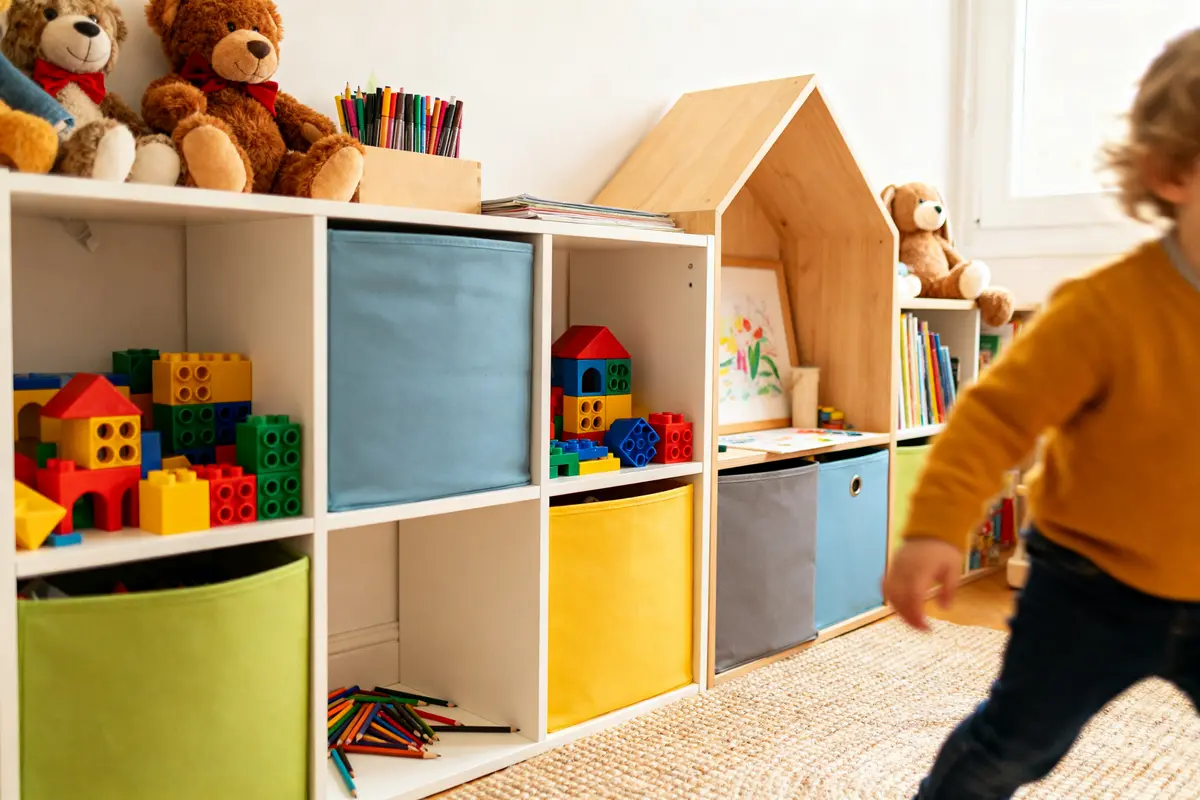
One of the smartest ways for storing toys is to start by defining dedicated play zones in the room. Dividing the playroom into specific sections allows children to enjoy different activities and keeps toys organized by type or purpose. For example, a corner for building blocks, another for stuffed animals, and a reading nook with books and soft toys. Having a zone system encourages purposeful play and helps avoid clutter.
Try to choose zones based on the available space and your child’s favorite toys. This way, the organization feels natural and intuitive. It’s also important to consider traffic flow so kids can move freely without feeling cramped. Assigning an area for each toy category facilitates cleaner habits and helps keep the environment tidy, especially in busy households.
Remember, it’s advisable to regularly sort toys every 3 to 6 months. This simple habit prevents accumulation of unused items and ensures the play zones remain functional and enjoyable for your children.
Hidden storage ideas for neat playrooms
Not everyone has the luxury of a big playroom, so clever hidden storage solutions are key to maintaining a neat space. Using furniture like ottomans with storage inside or benches with compartments can minimize visual clutter while providing accessible storage.
Wall-mounted shelves with baskets or hooks are another great option, making use of vertical space and keeping the floor clear. Storage nets or hanging pouches blend in perfectly and offer quick access to plush toys or small items, keeping surfaces tidy.
An often overlooked tip is to measure carefully the available height under beds or furniture before choosing under-bed storage containers, ensuring an optimal use of space without wasted or unusable room.
Shelf and bins: compact toy organization
Storing toys with labeled clear bins
Using shelves combined with clear plastic bins is a fantastic method for compact toy organization. Clear bins make it easy for kids and parents to spot toys without digging, saving time and avoiding mess. Adding labels on each bin further improves this system, especially as children grow and learn to sort their belongings independently.
Choose bins with sturdy handles and lids for better stacking and protection against dust. Placing these bins on adjustable shelves ensures flexibility to store items of different sizes, from Lego bricks to board game pieces. This method maximizes space and promotes a cleaner, more structured playroom.
Toy storage: label and categorize
Labeling is essential for a successful toy storage system. Labels can be simple words, pictures, or a combination, depending on your child’s age. It helps with categorization and builds their understanding of order.
Consider sorting toys by type, color, or play area. Categories like puzzles, cars, dolls, and art supplies make the cleanup routine smoother and keep clutter at bay. You can also color-code boxes for a playful touch that motivates kids. This method supports development of organizational skills and responsibility for belongings.
Le mot de l’auteur
“Encouraging children to participate in daily 5-minute tidying routines fosters lifelong habits that make playroom organization simple and stress-free.”
Under-bed and modular units for small spaces
Small room? No problem. Under-bed storage is a valuable asset for compact spaces. Sliding storage drawers or low-profile containers hidden under the bed serve as perfect spots to stash toys out of sight but within easy reach.
Before investing, measure the exact height clearance under your child’s bed to find containers that fit perfectly. It’s a trick rarely mentioned but crucial to avoid purchasing storage that can’t fit or can’t slide properly.
Modular storage units, like stackable cubes or sliding compartments, adapt well to changing needs and limited space. They can be arranged in various configurations, expanded as your child grows, and moved around if necessary. This flexibility is ideal for dynamic environments where toy collections often evolve.
Make it kid-friendly: access and routines
To make storing toys truly effective, it has to be kid-friendly. Storage solutions need to be accessible for children’s height and easy to open, so they feel empowered to tidy up by themselves.
Introduce simple routines to gently train your kids in organizing their toys. For instance, a daily 5-minute cleanup ritual before bedtime turns tidying into a playful habit. Use fun timers or music to make it engaging.
Visual reminders, like posters or colorful labels, also help children understand where toys belong. This approach builds independence and reduces parental stress.
- Create zones with open bins or low shelves for easy toy placement
- Use color-coded or pictorial labels for quick identification
- Set reminders or a cleanup song to make tidying up fun
- Encourage children to decide where their favorite toys go to boost responsibility
🧮 Toy Storage Space Calculator
Estimate the total storage space needed for your child’s toy collection.
FAQ — storing toys
What are the best ways to organize toys?
The best ways to organize toys involve creating dedicated zones by toy type, using clear labeled bins, and incorporating hidden storage like ottomans or under-bed containers. Regular sorting every few months helps keep the play area tidy and functional.
How can we store toys in small rooms?
In small rooms, storing toys efficiently can be done with under-bed storage containers, modular stackable units, and wall-mounted shelves to maximize vertical space. Measuring available space ensures chosen storage fits well without wasting room.
How can I create a toy storage system that is easy for children to use?
To create a kid-friendly toy storage system, use accessible open bins or low shelves, apply color-coded or pictorial labels for easy identification, and establish daily cleanup routines with fun reminders to encourage independence and responsibility.
What are some hidden storage solutions for toys?
Hidden storage solutions include furniture with built-in compartments like ottomans and benches, wall shelves with baskets or hooks, storage nets, and under-bed containers. These minimize clutter while keeping toys accessible and organized.
How can I encourage children to help in tidying their toys?
Encouraging children to help tidy toys can be done by involving them in choosing toy zones, using playful labels, setting cleanup routines like a daily 5-minute ritual, and making tidying engaging with music or timers to build lasting habits.
Why is labeling important in toy organization?
Labeling is important in toy organization because it supports categorization, helps children understand order, and facilitates independent cleanup. Labels can be words or pictures adapted to the child’s age, improving toy sorting and reducing clutter.

Annabelle est passionnée de cosmétologie et de bien-être. Elle aime partager ses découvertes et ses coups de cœur. Sans prétention, elle vous guide vers des gestes simples et efficaces pour prendre soin de vous au naturel.